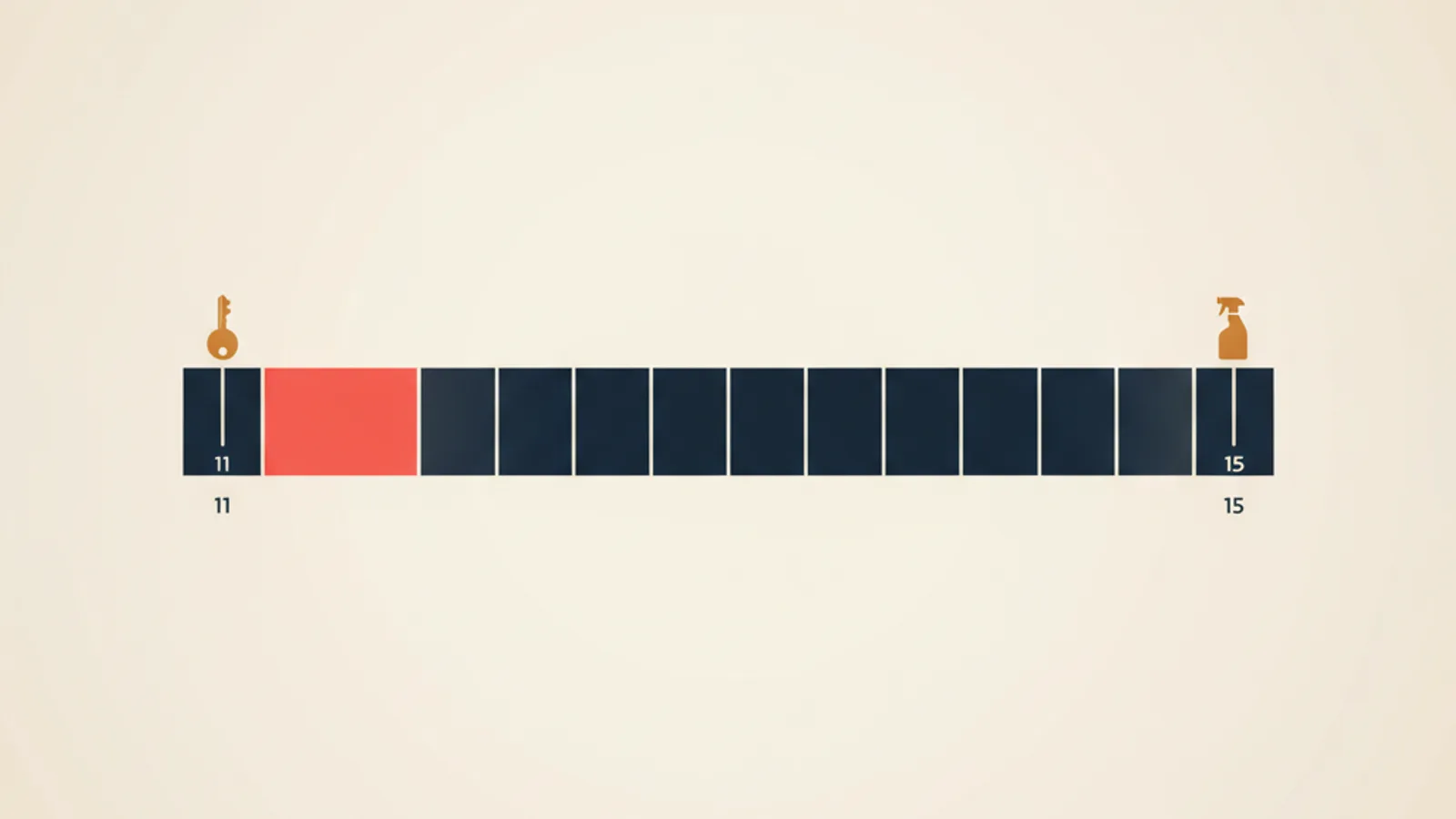
Letzten August schrieb mir eine Gästin um 09:30, ob sie statt 11:00 erst um 16:00 auschecken könne — „nur ein paar Stunden, der Zug geht um fünf". Meine Reinigungskraft Mira saß schon im Bus dorthin; der nächste Gast hatte 14:00 Anreise; die Wohnung musste in drei Stunden fertig sein. Ich sagte nein und bot 12:30 als spätestes an, was sie widerwillig nahm. Zwei Tage später kam eine 4-Sterne-Bewertung mit dem Satz „Host hätte flexibler sein können". Das drückte meinen rollierenden Schnitt sechs Wochen lang auf 4,86 und kostete mich, grob geschätzt, rund 90 $ in Suchrang-Verlust — über viermal die 20-$-Später-Auscheck-Gebühr, die ich verlangt hätte, wenn ich sie bis 13:00 gelassen hätte.
Die Später-Auscheck-Gebühr, die den meisten Schaden anrichtet, ist nicht die zu niedrige. Es ist die, die ohne Reinigungs-Puffer-, Same-Day-Anreise- und Superhost-Bewertungs-Mathematik ins Inserat geschrieben wurde. Dieser Beitrag liefert alle drei mit echten Zahlen.
Wofür die Gebühr eigentlich zahlt
Sie zahlt nicht für die Extra-Stunde, die der Gast in der Wohnung ist. Die marginalen Kosten einer Extra-Stunde für Sie sind grob null — die Einheit wird ohnehin geheizt, das WLAN ist bezahlt, die Wäsche ist auf dem Bett.
Sie zahlt für zwei spezifische Kosten, die der Gast nie sieht:
- Reinigungs-Überstunden oder verpasster Slot. Dauert der Wechsel 3 Stunden und die Reinigungskraft kostet 20 $/h (oder 60 $ pauschal), schiebt jede Stunde nach 11:00 die Reinigungskraft entweder über ihren nächsten Job oder komprimiert den Wechsel zu einem schlechteren. Reinigungskräfte merken das. Innerhalb von drei Monaten konsistenter Verspätung erhöht die Reinigungskraft den Tarif, kündigt oder fängt an, abzukürzen. Keines davon ist ein 20-$-Problem.
- Risiko, dass der nächste Gast in eine halbgereinigte Wohnung kommt. Der Folgeschaden. Reinigungskraft hetzt wegen Später-Auscheck, übersieht den Badspiegel, der nächste Gast sieht Schlieren beim Check-in und schreibt eine Bewertung. Jeder Host, den ich kenne und der seinen Superhost-Status verloren hat, kann die Woche benennen; bei der Hälfte war es eine Kettenreaktion aus einem Später-Auscheck, den sie hätten ablehnen sollen.
Die Gebühr um diese zwei Kosten herum framen, dann wird die Mathematik einfach. Sie um „was sich fair anfühlt" framen, dann setzen Sie 30 $/Tag und brennen sich ein halbes Jahr, bevor Sie merken, dass die Zahl nicht das Risiko deckt.
Die Reinigungs-Puffer-Mathematik
Standard-Airbnb-Voreinstellung: Auscheck 11:00, Anreise 15:00. Vier Stunden Puffer.
Reale Wechselzeiten variieren mehr, als Hosts zugeben:
| Objekttyp | Reinigungszeit | Puffer nötig (inkl. Anfahrt) |
|---|---|---|
| Studio, 1 Reinigungskraft | 1,5 h | 2,5 h |
| 1-Zimmer, 1 Reinigungskraft | 2 h | 3 h |
| 2-Zimmer, 1 Reinigungskraft | 3 h | 4 h |
| 3-Zimmer+, 1 Reinigungskraft | 4 h | 5 h |
| 2-Zimmer, 2 Reinigungskräfte | 1,75 h | 3 h |
Die „Puffer nötig"-Spalte addiert 30–60 Minuten Anfahrt und die unvermeidliche 10-Minuten-„Wo hat der Gast den Ersatzschlüssel gelassen"-Suche. Wer nie gemessen hat: bei den nächsten drei Wechseln tatsächlich messen und aufschreiben. Die geschätzte Zahl ist fast sicher 30 Minuten zu niedrig.
Eine 1-Stunde-Später-Auscheck (11:00 → 12:00) auf einem 2-Zimmer mit einer Reinigungskraft macht aus den 4 Stunden Puffer 3 Stunden — exakt die nötige Reinigungszeit, null Marge. Eine 2-Stunde-Später-Auscheck macht daraus 2 Stunden, die Reinigungskraft muss sprinten oder der nächste Gast kommt in eine nasse Küche.
Deshalb ist die richtige Gebührenstaffel nicht linear. Erste Stunde billig (Marge schrumpft, ist nicht weg). Zweite Stunde teuer (Marge null oder negativ). Dritte Stunde „nein, einfach die Nacht buchen".
Drei Preismodelle
Eines wählen. Nicht alle drei ins Inserat schreiben — das ist der schnellste Weg, wie ein Algorithmus zu wirken.
1. Stundengebühr, gedeckelt
Später Auscheck 25 $/Stunde nach 11:00, mit 60-Minuten-Kulanzfenster bei Anfrage vor 09:00 am Abreisetag. Maximal 4 Stunden; darüber wird die Nacht zum Standardpreis gebucht.
Am besten für: Stadt-Studios und 1-Zimmer mit 40–80 $ ADR, vorhersehbare Wochenwechsel. Das Kulanzfenster ist der Trick — eine Erlaubnis, die Sie geben, wenn der nächste Gast ohnehin nach 16:00 anreist, und kostet Sie nichts, schafft aber Goodwill.
2. Halbtags-Pauschale
Später Auscheck: 50 $ für jede Abreise 11:00–14:00, am Vortag genehmigungspflichtig. Abreisen nach 14:00 = volle Extra-Nacht.
Am besten für: Objekte mit logistisch hässlichem Wechsel — schmaler Zugang, einzelner Aufzug, Reinigungskraft nur Mo-Mi-Fr nachmittags verfügbar. Stundenweise Berechnung erzeugt Feilschen („kann ich nur eine Stunde extra für 25 $?"); die Pauschale schließt das. Nachteil: schlechterer Deal für Gäste, die nur 90 Minuten wollten — sie überspringen oder schreiben eine giftige Bewertung.
3. Voll-Extra-Nacht, kein Dazwischen
Auscheck ist 11:00. Später nötig? Nächste Nacht zum Standardpreis buchen. Halbtag nicht verfügbar.
Am besten für: hochausgelastete Strandwohnungen und Skihütten. Bei 90 %+ Auslastung in der Saison erfasst die Nächste-Nacht-Gebühr echten Wert: Entweder ist die Nacht ohnehin gebucht und der späte Auscheck unmöglich, oder die nächste Nacht ist offen und Sie verkaufen lieber voll als halb für 30 $. Hart, aber ehrlich.
Ich fahre Modell 1 auf den Stadt-Studios und Modell 3 auf der Hütte. Modelle innerhalb desselben Listings zu mischen, bringt Ärger — die Politik im Listing muss zur Politik passen, die Sie tatsächlich durchsetzen, sonst merken es die Gäste und die Bewertungs-Strafe beginnt.
Wann die erste Stunde gratis
Das ist der Hebel, den die meisten Hosts nie ziehen, und der mathematisch am stärksten zu Ihren Gunsten kippt.
Wenn der nächste Gast nach 16:00 anreist (weil er Late-Check-in bestätigt hat oder gar keine Buchung kommt), kostet die erste Stunde gratis Sie nichts Reales. Die Reinigungskraft muss nicht um 11:00 starten, um 15:00 fertig zu sein, wenn der Gast erst um 17:00 kommt — sie kann um 12:00 anfangen und rechtzeitig fertig werden.
Wenn das in eine 5-Sterne-Bewertung umgesetzt wird, lautet die Mathematik:
- Wert für den Gast: ~25 $ (die Gebühr, die er gezahlt hätte).
- Kosten für Sie: ~0–10 $ (Reinigungskraft akzeptiert eine Stunde später, manchmal mit 10 $ Bonus).
- Erwarteter Bewertungs-Lift: 0,05–0,10 Sterne im rollierenden Schnitt × Ihrem rund 30–80 $/Monat Superhost-Aufschlag.
Nicht gratis wenn:
- Nächster Gast Same-Day vor 14:00 → geht nicht, die Mathematik kippt nicht.
- Reinigungskraft hat enges Fenster zwischen zwei anderen Wechseln → Sie rauben Peter aus.
- Gast fragt um 10:55 statt am Vortag → Planung belohnen, nicht Überraschung. Vollpreis.
- Sie haben den Gast bereits anderswo gratis bedient (Early-Check-in, Extra-Handtücher). Das kumulierte Goodwill ist verdient.
Die Formulierung zählt. „Ja, bis 12:00 kostenlos — danach 25 $ pro Extra-Stunde" landet großzügig. „Klar, kein Problem, keine Gebühr" liest sich als Host, der nicht nachgedacht hat, und ein Bruchteil Gäste liest das als Lizenz, 14:00 zu verlangen.
Die Same-Day-Anreise-Klippe
Das härteste Nein im Hosting ist „ich kann Sie nicht zwei Stunden länger lassen, weil jemand anders kommt".
In der Nachricht konkret werden. „Der nächste Gast reist heute um 13:00 an und die Reinigungskraft braucht das volle Fenster — ich muss bei 11:00 bleiben." Gäste schieben selten zurück, wenn ein konkreter Grund da ist. Sie schieben zurück, wenn nur die Politik genannt wird — Politik wirkt verhandelbar.
Wenn Ihr Kalender Same-Day-Anreisen nicht auf einen Blick zeigt, ist das das größere Problem. Eine Später-Auscheck-Anfrage soll 90 Sekunden zu evaluieren sein. Dauert es 10 Minuten, weil Sie sich in drei Plattformen einloggen müssen, sagen Sie entweder ja, wenn Sie nein sagen sollten, oder nein, wenn Sie hätten ja sagen können — beides bluten Umsatz. (Zur Kalender-Seite: airbnb-booking-calendar-sync-free deckt iCal-Mechanik; die Puffer-Seite in cleaning-buffer-days.)
Booking.com gegen Airbnb gegen Vrbo
Die Gebühr ist gleich; das Eintreiben nicht.
Airbnb erlaubt eine „Resolution Center"-Gebühr nach dem Aufenthalt — die Später-Auscheck-Gebühr mit einer Zeile begründen, der Gast akzeptiert oder bestreitet, die Plattform zieht ein. Sauberste der drei. Die meisten Gäste zahlen ohne Streit, wenn die Gebühr im Listing steht.
Booking.com rechnet Ad-hoc-Gebühren nicht über die Plattform ab. Sie kassieren beim Auscheck, drei Optionen: Stripe-Link am Abreisetag (höchste Eintreibrate, ~85 %), Bargeld bei Schlüsselübergabe (~95 %, nur bei manuellem Check-in), oder das „Gast belasten"-Tool im Extranet, das in meiner Erfahrung 4–6 Wochen verspätet zahlt und zu leicht anfechtbar ist. Keine 50-$-Später-Auscheck-Gebühr ins Booking-Listing schreiben und annehmen, sie landet immer.
Vrbo liegt zwischen den beiden. Die Plattform unterstützt nachträgliche „Zusatzgebühren", aber der Ablauf ist langsam (10–14 Tage) und die Streitquote höher als Airbnb. Ich rechne Vrbo-Später-Auscheck-Gebühren mit 60 % erwarteter Eintreibung.
Dieselbe Gebührenstaffel auf alle drei Plattformen setzen. Unterschiedliche Erwartungen für tatsächliche Eintreibung.
Was bestritten wird
Alles, was Sie nicht vor dem Aufenthalt schriftlich hatten.
Die Gebührenstaffel gehört in drei Orte: in die Hausregeln des Listings („Später Auscheck: 25 $/h nach 11:00, am Vortag anfragen"), in die Vor-Anreise-Nachricht („Auscheck ist 11:00 — wenn Sie später brauchen, schreiben Sie bis 21:00 am Vorabend für verfügbare Optionen") und in die Tag-der-Abreise-Erinnerung, falls Sie eine schicken. Drei Berührungen; niemand kann von Überraschung sprechen.
Was Gäste erfolgreich bestreiten:
- Mündliches „okay" am selben Tag, schriftlich umgekehrt. Wenn Sie um 09:00 mündlich ja sagten und um 13:00 berechnen, gewinnt der Gast. Genehmigung in den Chat schreiben.
- Gebühr nicht im Listing. Airbnbs Schiedsteam setzt keine Gebühr durch, die zum Buchungszeitpunkt nicht im Listing stand. Die „Standard"-Gebühr ist null.
- Erste Stunde gratis ohne Erwähnung. Wenn Sie „12:00 ist okay" sagten und dann 11:00–12:00 berechnen, verlieren Sie. Immer „erste Stunde kostenlos" beifügen.
Was Gäste erfolglos bestreiten:
- Die Gebühr selbst, wenn veröffentlicht und konsistent.
- „Ich habe Ihre Hausregeln nicht gesehen." (Sie haben sie bei Buchung bestätigt.)
- „Es waren keine anderen Gäste, warum mir berechnen?" (Egal; die Gebühr ist für Reinigungskosten, nicht Belegung.)
Eine Meinung
Die Später-Auscheck-Gebühr ist der am meisten übersehene Politik-Hebel in der Kurzzeitvermietung. Hosts verbringen Stunden mit Mindestnächte-Optimierung, Längen-Rabatten und Saisonpreisen — und lassen Auscheck als eine harte Zahl („30 $") stehen, die sie durchsetzen, wenn sie sich erinnern, und vergessen, wenn sie es nicht tun. Inkonsistenz erzeugt die schlechten Bewertungen, nicht die Zahl.
Ein Modell wählen, in alle drei Plattform-Listings schreiben, jedes Mal gleich durchsetzen. Der Host, der die erste Stunde immer gratis und die zweite immer berechnet, hat einen 5-Sterne-Ruf. Der Host, der gelegentlich drei Stunden gratis gibt und gelegentlich 50 $ für eine Stunde berechnet, hat 4,7. Gleicher Umsatz. Anderes Ergebnis.
Wer diese Politik-Logik — Same-Day-Anreise-Lookups, Reinigungs-Puffer-Mathematik, Später-Auscheck-Erinnerungen automatisch um 21:00 am Vorabend — automatisch laufen lassen will, das ist RentTools. Kostenlos, selbst gehostet oder verwaltet, kein Upsell.
Häufige Fragen
Was ist eine faire Stunden-Später-Auscheck-Gebühr?
20–40 $/h für die meisten Objekte. Unteres Ende, wenn Ihre Reinigungsgebühr unter 40 $ liegt und Wechsel kurz sind; oberes Ende für 2-Zimmer+ mit 70 $+ Reinigung. Stunden-Gebühren über 50 $ wirken strafend und reduzieren freiwillige Späte-Anfragen, was schlechter ist als der Umsatz aus einer niedrigeren Gebühr.
Soll ich meine Später-Auscheck-Gebühr im Listing veröffentlichen?
Ja — nur so ist sie auf Airbnb einziehbar. Hausregeln-Bereich, eine Zeile. Vrbo und Booking.com lesen die Regeln im Streitfall, also zählt Konsistenz über die drei.
Was, wenn der Gast einfach lange bleibt, ohne zu fragen?
Tatsächliche Abreisezeit notieren (Foto der Reinigungskraft beim Eintreffen liefert Zeitstempel). Veröffentlichte Gebühr nachträglich über das Schiedstool der Plattform berechnen. Screenshot der Regel beifügen. Eintreibrate ~70 % auf Airbnb, niedriger anderswo.
Kann ich Später-Auscheck-Gebühr und flexible Stornorichtlinie kombinieren?
Ja. Beide unabhängig. Stornorichtlinie regelt, was bei Storno vor Anreise passiert; Später-Auscheck-Gebühr ist eine Aufenthaltszeit-Servicegebühr. Bewerter verwechseln das gelegentlich; die Plattformen nicht.
Zählt eine Später-Auscheck-Gebühr zum Reinigungsgebühren-Cap auf Airbnb?
Nein. Airbnbs Reinigungsgebühr-Leitlinie betrifft die Reinigungsgebühr selbst; Servicegebühren wie Später-Auscheck werden separat berechnet und lösen nicht dieselbe Prüfung aus. Aber: Wenn Ihre „Reinigung + Später-Auscheck" routinemäßig über 40 % einer Nachtrate summieren, erwarten Sie höhere Stornoquoten von preissensiblen Gästen.
Bis wann sollen Gäste anfragen?
Am Vorabend, vor 21:00. Das gibt Ihnen Zeit, die Anreise des Folgetages zu prüfen, die Reinigungskraft zu informieren und bis 22:00 zu bestätigen. Tag-selbst-Anfragen sind stressig und führen zu schlechten Entscheidungen in beide Richtungen; „verfügbar bei Anfrage bis 21:00 am Vortag" im Listing reduziert Tag-selbst-Anfragen um etwa die Hälfte.
Beklagen Gäste die Gebühr in Bewertungen?
Selten, wenn sie im Listing steht und konsistent angewandt wird. Sie beklagen Inkonsistenz — nein gesagt, wo anderen ja gesagt wurde, oder nach mündlichem Ja berechnet. Die Gebührenhöhe selbst ist fast nie die Schlagzeile einer schlechten Bewertung; die wahrgenommene Unfairness der Anwendung schon.
Soll ich die Gebühr als Profit oder nur zur Kostendeckung nutzen?
Erst Reinigungskosten decken. Wenn die Reinigungskraft 20 $/h kostet und Sie 25 $/h berechnen, deckt diese 5-$-Differenz pro Stunde gerade den Awkwardness-Aufschlag (Nachricht, Kalender-Check, Risiko). Als Profit-Center bepreist, motiviert es Sie, ja zu sagen, wenn Sie nein sagen sollten — und die schlechte Bewertung ist fast immer teurer als die marginalen 5 $.
Weiterlesen
Off-season math: close the listing or stay open?
Closing for the low season doesn't stop the insurance, the internet or the standing charges. The per-night contribution math on when staying open pays.
Short-term rental laundry: in-house machines vs a service
What a turnover's laundry really costs in-house versus at a service: per-load math, the extra linen set a 48-hour turnaround forces, and the real crossover.
iCal feed URL security: what your calendar link leaks
Your Airbnb and Booking.com iCal export URLs are passwords with no expiry. What each feed actually leaks, how to read yours in 90 seconds, and when to rotate.
Seasonal pricing math: turn your booking history into a rate ladder
Most hosts charge one rate all year. Build a seasonality index from your own occupancy, turn it into monthly rate multipliers, and stop leaking margin.
Check-in and check-out times: the turnover window math
The gap between checkout and check-in is your entire cleaning window. Worked math on turnover time, cleaner cost, and when to block a buffer day instead.
EV charger ROI for short-term rentals: the occupancy-filter math
An EV charger is an occupancy play, not a nightly premium — you land in a filtered search with almost no competitors. The install and payback math, by market.
Comments
Sign in to comment.
- No comments yet.