When do Airbnb and Booking.com actually pay you? Payout timing
Airbnb pays ~24h after check-in; Booking.com pays weeks later. A worked timeline of when money really lands, the first-payout trap, and the cash-flow gap.
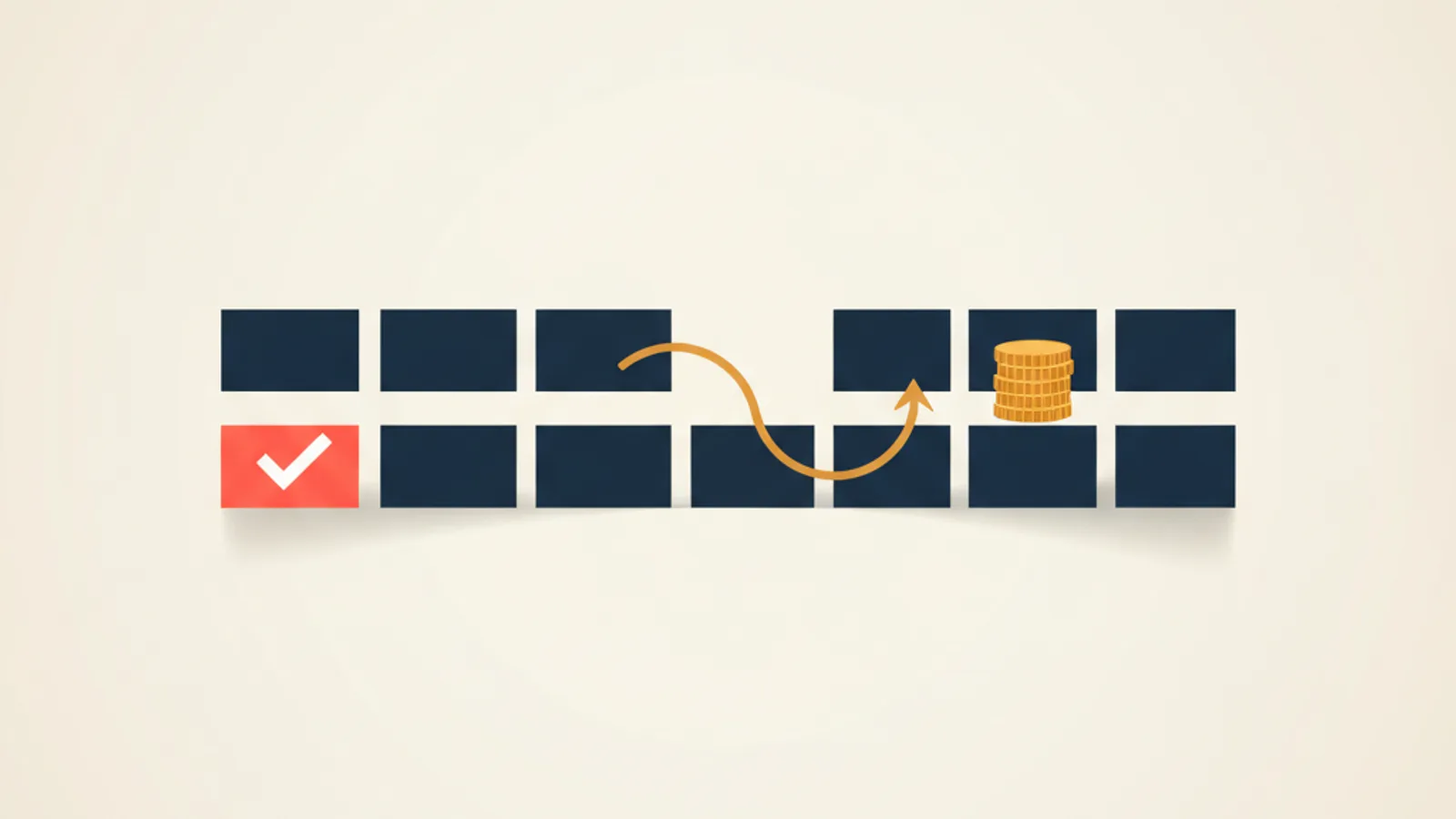
Last March I had a fully booked calendar — 26 nights sold across two apartments — and a checking account that read close to zero on the 14th. The bookings were real. The cleaner's invoice was real. The money just hadn't moved yet. Every one of those reservations was confirmed; not one had paid out. That month taught me that "booked" and "paid" are two different dates, and the gap between them is wide enough to miss a bill.
This post maps that gap. When Airbnb releases money, when Booking.com does, why your first payout is slower than every one after it, and how many weeks of operating cash you actually need to carry.
Why "booked" and "paid" are two different dates
A confirmed reservation is a promise, not a deposit. The guest has paid the platform; the platform has not paid you. Between those two events sits a delay that every platform sets on its own terms, and the delay is there for a reason: it protects the guest. If a host cancels, or the listing turns out to be a scam, or the guest checks in to find no working key, the platform wants the money still in its own account so it can refund without chasing the host.
That logic is sound. It is also invisible on your calendar. Airbnb shows you a green confirmed booking the second the guest pays, and your brain files it as income. The accounting reality is that the income event is the payout release, which can be weeks away. New hosts who treat the calendar as a bank statement are the ones who get caught short.
There are exactly three numbers that matter: when the platform releases the money, how long the transfer then takes to land, and how much longer your first payout is held. Get those three right and the cash-flow gap stops being a surprise.
Airbnb: paid about 24 hours after check-in
Airbnb's rule is clean. It releases your payout roughly 24 hours after the guest's scheduled check-in time. Not when the guest books. Not at checkout. Twenty-four hours after the check-in time printed on the reservation.
So a guest who books in January for a stay starting March 20 with a 3pm check-in triggers a payout release around 3pm on March 21. A no-show does not stop the clock — the release is tied to the scheduled check-in, so the money moves whether or not the guest walked through the door.
Two exceptions worth knowing:
- Long stays (28+ nights). Airbnb pays these monthly. The first installment releases 24 hours after check-in; each following installment releases every 30 days.
- No payout method on file. If your "Get paid" setup is incomplete when the guest checks in, the money parks in your Airbnb balance until you add a method. It is not lost, but it does not move on its own.
After release, the transfer speed depends on the method you chose:
| Payout method | Time to land after release |
|---|---|
| PayPal | About 1 business day |
| Payoneer | About 1 business day |
| Bank transfer (ACH, US) | 1–3 business days |
| Bank transfer (SEPA, EU) | 1–2 business days |
| International wire | 3–5 business days |
One quiet cost: if your payout currency differs from your listing currency, Airbnb converts at a rate with roughly a 3% spread baked in. On a $2,000 month that is $60 you never see. Match the two currencies if your bank lets you.
Booking.com: it depends which payment model you're on
Booking.com is the one that surprises hosts, because Booking.com often does not pay you at all in the way Airbnb does. Which model you are on decides everything.
Virtual credit card
On the virtual-credit-card model, Booking.com does not hold or transfer your money. It hands you a card — a real Mastercard or Visa number tied to that one reservation — and you charge it yourself through your own payment terminal or processor (Stripe, SumUp, a hotel PMS, whatever you use).
The catch is the activation date. The card cannot be charged before it activates, and you set that timing per property in the extranet — commonly the check-in date or the day after checkout. Charge it a day early and it declines. Worse, the card has a validity window: leave it uncharged for too long after checkout — often around 14 to 30 days — and it expires. An expired virtual card means contacting Booking.com partner support to request reactivation, and if you are far enough past the window, you can lose the ability to collect at all.
Commission on this model is billed separately. Booking.com invoices you monthly for the prior month's commission, and that invoice is its own due date — money flowing the other way.
Payments by Booking.com
On Payments by Booking.com, Booking collects from the guest and pays you, the way Airbnb does. The payout schedule depends on your country, but the common shape is monthly, on a fixed date in the month after the stay — some markets run bi-weekly or weekly. Commission is netted out before the payout (or invoiced separately, again depending on the market).
The practical takeaway: a Booking.com stay that ends on the 23rd of a month might not pay out until the middle of the next month. That is three to four weeks slower than Airbnb's 24-hour clock for the same calendar dates.
The cash-flow gap nobody budgets for
Put real dates on it. Say a guest books a 3-night stay on January 5, checks in March 20, checks out March 23. Here is when the money actually exists, by platform:
| Platform / model | Payout released | Money in account |
|---|---|---|
| Airbnb (bank transfer) | March 21 | March 23–24 |
| Airbnb (PayPal) | March 21 | March 22 |
| Booking.com virtual card | You charge it March 20 or 23 | March 25–27 (your processor settles) |
| Payments by Booking.com | Monthly cycle | Mid-April |
The booking was confirmed January 5. The money for the slowest path lands mid-April — more than three months after the calendar turned green, and more than three weeks after the guest left. Your cleaner invoiced you on March 23. Your mortgage did not wait.
This is the gap. It is not a bug and there is no setting that closes it. The fix is on your side: carry an operating buffer. For background on the other side of this ledger — the costs that fall due whether or not a payout has landed — see cleaner pay for short-term rentals.
The first-payout delay — the new-host trap
Every guide above describes the steady state. Your first payout does not follow it.
On Airbnb, a brand-new host's first payout is held for verification. Airbnb runs identity and payout-account checks, and until those clear, the first release can lag well past the 24-hour rule — hosts routinely report the first payout taking one to two weeks longer than every payout after it. The platform is not sitting on your money to be difficult; it is confirming you are a real person with a real bank account before it sends a stranger's money to you. Every subsequent payout follows the normal clock.
On Booking.com, a new property does not get virtual cards or Payments enabled until it passes review, and the Payments onboarding — bank-account verification — takes one to two weeks on its own.
The trap is the host who lists, gets a first booking for next week, and mentally spends the money on day-one cleaning supplies. Your first guest's payment is the slowest one you will ever receive. Plan your launch month assuming the first payout lands a couple of weeks late, and you will never feel it.
How to shorten the gap
You cannot beat the platform's release clock, but you can stop adding your own delays on top of it:
- Finish payout setup before your first guest checks in. An incomplete "Get paid" profile parks money you have already earned.
- Pick the fastest method you can stomach. PayPal and Payoneer land in about a day; an international wire takes a week. Weigh the fee against the days.
- Set virtual-card activation to check-in, not checkout, where Booking.com allows it. That lets you charge two or three days sooner.
- Charge every virtual card the day it activates. Do not batch them weekly — a batched card is a card you can forget until it expires.
- Match payout currency to listing currency and skip the roughly 3% conversion spread.
- Carry six weeks of operating cash. Cleaner pay, utilities, supplies, and any debt service should be covered by money already in the bank, never by a payout you are counting on.
None of this is exotic. It is the same discipline any business with net-30 invoicing runs. Short-term rental simply hides the invoicing terms inside a friendly green calendar, so hosts forget the terms exist.
One opinionated take
Payout timing is not a payments problem. It is a cash-flow problem, and the hosts who get hurt are the ones who file it under the wrong heading. They obsess over the 3% currency spread and the PayPal fee — small, visible numbers — while ignoring the structural fact that a fully booked month can leave them with an empty account for two weeks.
Treat a confirmed booking the way a business treats an invoice it has sent: revenue earned, cash not yet received. Carry six weeks of operating money so the gap never touches your cleaner's pay or your mortgage. Do that and payout timing becomes a non-event — a date on a spreadsheet instead of a panic on the 14th.
If you want the gap mapped against your own calendar — which stays have released, which Booking.com cards are still chargeable, what lands this week — that is the kind of thing RentTools is built to surface. And if you are weighing whether a paid channel manager would smooth any of this, the honest math is in channel manager break-even math.
Frequently asked questions
When exactly does Airbnb release my payout?
About 24 hours after the guest's scheduled check-in time on the reservation. It is not tied to the booking date or the checkout date. For stays of 28 nights or longer, Airbnb pays monthly, with the first installment 24 hours after check-in.
Why is my first Airbnb payout taking so long?
New hosts have their first payout held while Airbnb verifies identity and the payout account. This is normal and one-time — the first release can lag the standard 24-hour rule by one to two weeks. Every payout after the first follows the normal clock.
Can I charge a Booking.com virtual credit card before the guest arrives?
No. The card has an activation date set per property in the extranet, commonly the check-in date or the day after checkout. Charging before activation declines. You also cannot leave it indefinitely — the card expires within roughly 14 to 30 days of checkout.
What happens if I forget to charge a virtual credit card?
Once past its validity window the card expires. You then contact Booking.com partner support to request reactivation. If you are far enough past the window, reactivation may not be possible and you can lose the ability to collect that reservation's payment, so charge cards the day they activate.
Does Booking.com take its commission before or after it pays me?
It depends on the model. On Payments by Booking.com, commission is generally netted out before the payout reaches you. On the virtual-card model, you collect the full amount and Booking.com invoices you separately for commission, monthly, for the prior month's stays.
How long does a bank transfer take once Airbnb releases the money?
For domestic transfers — ACH in the US, SEPA in the EU — typically 1 to 3 business days. International wires take 3 to 5. PayPal and Payoneer are usually about one business day.
When do I get paid for a long stay of 28 nights or more?
Airbnb pays long stays monthly. The first installment releases 24 hours after check-in, and each following installment releases roughly every 30 days for the duration of the stay.
Should I switch payout methods just to get money faster?
Only if the math works. PayPal and Payoneer are faster than a bank transfer but carry their own fees, and a per-payout fee on a high-volume month adds up. If your cash-flow gap is already covered by an operating buffer, the extra day or two of speed is rarely worth a recurring fee.
Keep reading
Off-season math: close the listing or stay open?
Closing for the low season doesn't stop the insurance, the internet or the standing charges. The per-night contribution math on when staying open pays.
Short-term rental laundry: in-house machines vs a service
What a turnover's laundry really costs in-house versus at a service: per-load math, the extra linen set a 48-hour turnaround forces, and the real crossover.
iCal feed URL security: what your calendar link leaks
Your Airbnb and Booking.com iCal export URLs are passwords with no expiry. What each feed actually leaks, how to read yours in 90 seconds, and when to rotate.
Seasonal pricing math: turn your booking history into a rate ladder
Most hosts charge one rate all year. Build a seasonality index from your own occupancy, turn it into monthly rate multipliers, and stop leaking margin.
Check-in and check-out times: the turnover window math
The gap between checkout and check-in is your entire cleaning window. Worked math on turnover time, cleaner cost, and when to block a buffer day instead.
EV charger ROI for short-term rentals: the occupancy-filter math
An EV charger is an occupancy play, not a nightly premium — you land in a filtered search with almost no competitors. The install and payback math, by market.
Comments
Sign in to comment.
- No comments yet.